The Bavarian Beer par Excellence
The Märzen Style
Munich, 16th century. A new beer style is born, with the aim of bypassing the summer production ban and creating a long-life beer that could be consumed during the highlight of the year: September – October. It is the Märzen style.
Märzen: The Beer of Oktoberfest
Not everyone has been there, but everyone has heard of it. For beer lovers, Oktoberfest represents a true Mecca, a place of worship, a moment to dream of and experience.
For 16 consecutive days in Munich, beer is the absolute protagonist in one-liter mugs that ignite desire like nothing else.
But what is the beer that flows without interruption for over two weeks and becomes the common thread of unforgettable high-alcohol days? It is called Märzen and represents a style with ancient roots.
The Birth of the Märzen Style
The Märzen style originated about 500 years ago in Bavaria as a response to a practical necessity. According to an edict of 1539, beer production could only take place between September 29 and April 23. The restriction was due to the risk of fires that could occur in the hotter months, during which an official seal was placed on the mash tuns.
These dates were also (and above all) fundamental for temperatures: in warmer periods, there was a risk that unwanted yeasts and bacteria would interfere during fermentation. In fact, until the mid-1800s, there were neither refrigerators nor hermetically sealed fermentation tanks: until the second half of the 1890s, beer was brewed and fermented in the open air. If the environment and the tank were not cooled to a sufficiently low temperature, the beer risked turning sour or undergoing uncontrolled fermentation.
Thus, once the ban was established, master brewers faced a significant problem: producing a beer that could keep its taste and flavor intact until September, the month in which the world’s largest beer festival is celebrated in Munich: Oktoberfest.
After several experiments and attempts, they created a beer with a high concentration of hops and a high alcohol content that allowed it to be preserved for about six months and maintain its organoleptic characteristics until the start of the event. Thus the Märzen style was born, a name derived from March, the month in which most of the production was concentrated.
Characteristics of Märzen Beer
Märzens belong to the lager family and present different characteristics compared to the originals of the past.
Today, dark malts have been replaced by light ones and the high dosage of hops has been gradually reduced.
They are pleasant and elegant beers. Visually, they impress with an amber-orange color that does not turn golden; on the nose, they reveal an aroma of bread crust, while on the palate, they present a medium body and a creamy texture.
Märzen Today: Daura Märzen
Märzens are very popular beers worldwide, and many breweries include one in their selection. Among QBA’s producers, we find the Spanish brewery Damm, which since its founding 140 years ago, has made the quality of ingredients its hallmark.
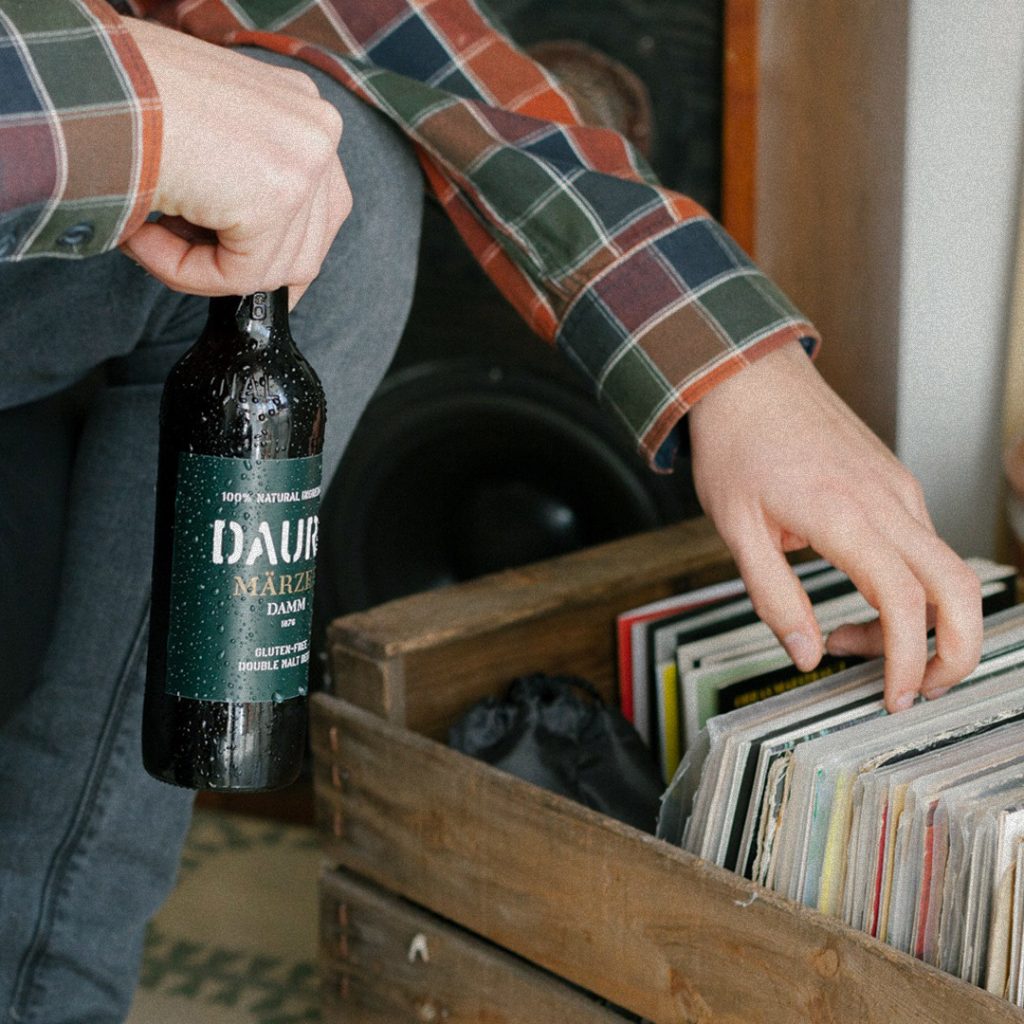
Thanks to research and social commitment, Damm has created Daura Märzen, the first gluten-free double malt Märzen.
The vast majority of industrial Oktoberfest beers today are lighter and paler than the original. Daura Marzen, however, is faithful to the original.